Have you started hearing strange noises coming from your roof? Noticed pigeon droppings on your patio, feathers appearing around your property, or gutters that seem to be blocking more often than usual?
If you have solar panels on your roof, these could be warning signs that pigeons have moved in underneath them.
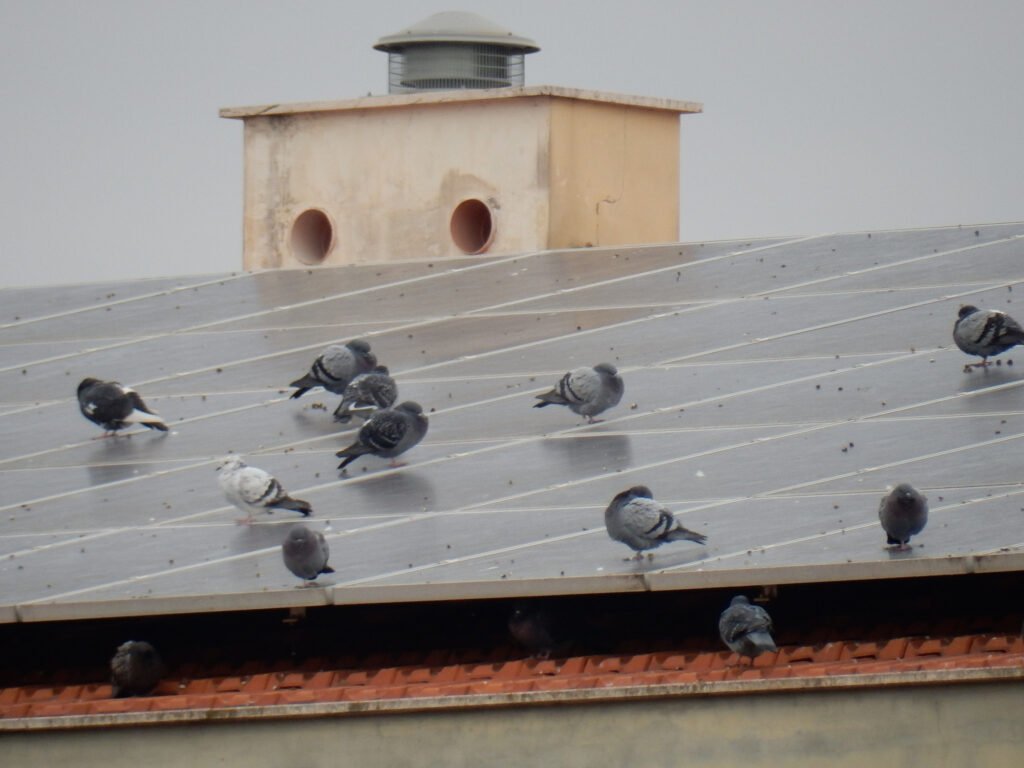
Solar panels provide pigeons with an attractive place to roost and nest. The gap beneath the panels offers shelter from the weather, protection from many predators and a relatively undisturbed space in which to raise their young. Once pigeons discover a suitable nesting location, they may return repeatedly, allowing the problem to develop over time.
At Solar Pigeon Proofing Service, we understand the problems that can arise when pigeons establish themselves beneath solar panels. In this guide, we’ll explain the signs to look for, the potential problems pigeon activity can cause, and how professional solar pigeon proofing can help protect your property.
1. Pigeon Droppings Around Your Property
One of the most noticeable signs of pigeon activity is an increasing amount of bird droppings around your home.
You might notice white and grey droppings on:
- Patio doors, windows and conservatory roofs.
- Garden furniture, paving and decking.
- Driveways and parked vehicles.
- Roof tiles and the surface of your solar panels.
- Window ledges, walls and other areas beneath regular pigeon perching points.
If pigeons are nesting under your solar panels, you may notice droppings accumulating beneath the array or along the roofline. You might also find that the same areas become dirty repeatedly, even after being cleaned.
A few droppings do not necessarily mean pigeons are nesting beneath your panels. However, repeated fouling in the same location, particularly when accompanied by cooing, feathers or pigeons disappearing beneath the panels, is a reason to investigate further.
Why pigeon droppings should not be ignored
Bird droppings are unpleasant and can be difficult to clean once they have dried. Accumulations can also damage or stain some building materials and create hygiene concerns.
Avoid brushing or scraping large accumulations of dried droppings without appropriate precautions, as this can generate dust. If there is substantial contamination, professional cleaning may be the safer option.
2. Hearing Cooing, Scratching or Movement on the Roof
Sometimes, the first indication of a pigeon problem is a noise rather than something you can see.
Listen out for:
- Persistent cooing from the roof.
- Scratching or shuffling sounds.
- Fluttering wings and birds landing or taking off.
- The sound of twigs or other nesting materials being moved.
- Chirping or squeaking from young birds.
These sounds may be more noticeable early in the morning, when pigeons become active, or during quieter periods when there is less background noise.
If you regularly hear sounds from the same section of your roof, it may indicate that pigeons are roosting or nesting nearby.
However, roof noises are not proof of pigeon activity on their own. Other birds, squirrels, loose roof components and wind can produce similar sounds.
Our advice: take note of where and when the noises occur. If they repeatedly come from directly beneath your solar panels, look for other signs from ground level rather than attempting to climb onto the roof.
3. Pigeons Repeatedly Flying Under Your Solar Panels
This is one of the clearest visual clues to watch for.
Stand somewhere safe where you can see your roof and observe the pigeons’ behaviour. Do you regularly see birds landing on the roof, walking towards the solar array and disappearing underneath the panels?
You might notice pigeons:
- Landing on the roof and squeezing into the gap beneath the panels.
- Entering and leaving the same section of the array.
- Perching on the roof for long periods.
- Returning to the same location throughout the day.
- Gathering in pairs or groups around the panels.
A pigeon occasionally landing on your roof is perfectly normal. The concern is repeated activity focused on the gap beneath your solar panels.
Solar panels can create a sheltered nesting area that is difficult to inspect from the ground. By the time a homeowner notices a substantial amount of mess, the pigeons may have been using the space for some time.
Pigeons can also return to locations where they have successfully nested before, which is why simply waiting for them to leave may not resolve the underlying problem.
4. Blocked Gutters, Twigs and Nesting Debris
Your gutters can provide another important clue.
Pigeons build relatively simple nests using twigs and other materials. As birds move around the roof and beneath the solar panels, loose nesting material, feathers and debris can accumulate around the roofline.
Look for:
- Twigs and nesting material visible in the gutters.
- Feathers collecting around downpipes or gullies.
- Sections of guttering that repeatedly overflow.
- Debris appearing beneath the roof after windy weather.
- An unusual build-up of material around the ends of the solar panel array.
Can pigeons block your gutters?
Yes. Nesting debris and feathers can contribute to blockages, particularly when mixed with leaves and other material already in the guttering.
Blocked gutters can prevent rainwater from draining correctly. Water may overflow onto walls, windows, paths or conservatory roofs, potentially contributing to damp-related problems or damage if the issue persists.
It is important to remember that leaves, moss and other debris are also common causes of blocked gutters. Finding a blockage does not automatically mean pigeons are responsible.
Where pigeon activity is suspected, inspecting and cleaning the affected guttering can help establish the extent of the problem.
Why solar-side gutter cleaning can be worthwhile
The gutter directly beneath or alongside your solar panels may be difficult to inspect from ground level. If pigeons have been nesting above it, the gutter may contain a mixture of ordinary debris and nesting material.
Solar Pigeon Proofing Service offers optional solar-side gutter cleaning alongside pigeon proofing, where access and safety arrangements permit. This helps homeowners address accumulated debris as part of the wider job rather than overlooking the guttering altogether.
5. Feathers, Twigs and Nesting Materials Around the Roof
Not every sign of pigeon nesting is obvious.
You might find small piles of twigs, dry grass, feathers or other nesting material around your property. These can collect on flat roof sections, in gutters, on conservatory roofs or on the ground beneath the solar array.
Pigeons’ nests are often loosely constructed, so individual twigs may fall away as birds enter and leave the nesting area.
If you repeatedly find fresh nesting debris beneath the same part of the roof, particularly alongside droppings and regular pigeon activity, it is worth arranging a closer inspection.
Do not assume that a few twigs confirm a nest is present. Wind can move material around the roof, and other birds may be responsible.
6. An Unpleasant Smell Around the Roofline or Loft
A persistent unpleasant smell can sometimes accompany an established pigeon nesting problem, particularly where droppings, nesting material and other organic debris have accumulated in a poorly ventilated area.
You may notice an odour near an upstairs window, loft hatch, roof space or the exterior of the property.
However, smells can have many causes, including drainage problems, dampness and other animals. An unpleasant smell alone is not enough to identify pigeons as the source.
If the smell is accompanied by repeated pigeon activity, droppings and nesting debris, further investigation may be appropriate.
7. Insects Around Nesting Areas
Established bird nests and accumulations of organic material can sometimes support bird-associated parasites and other insects.
If you notice unusual insect activity around the loft, roofline or an area where pigeons appear to be nesting, this may be another reason to investigate.
It is not a reliable sign on its own, and insects can originate from many other sources. Avoid treating the problem without identifying what is present and where it is coming from.
Where there is significant contamination or a suspected parasite problem, a suitable pest-control professional may be needed in addition to pigeon proofing.
8. Your Solar Panels Look Dirty or Are Difficult to Inspect
Pigeon activity can leave droppings, feathers and debris around the surface and edges of a solar array.
Droppings on the panels can be unsightly and may affect light reaching the cells when deposits are substantial. However, a dirty panel does not necessarily mean pigeons are nesting underneath it.
Equally, a change in your solar electricity generation is not proof of a pigeon problem. Output varies with daylight hours, weather, shading, seasonal conditions and the condition of the equipment.
If your system’s performance has changed unexpectedly, check your inverter or monitoring information and consult a qualified solar professional where necessary. Do not assume pigeon proofing alone will resolve an unexplained electrical or generation issue.
Pigeon proofing and solar panel cleaning serve different purposes: proofing helps prevent birds from accessing the space beneath the panels, while cleaning addresses suitable surface dirt and deposits.
Why Do Pigeons Choose to Nest Under Solar Panels?
To understand how to prevent the problem, it helps to understand why pigeons are attracted to solar arrays in the first place.
Shelter and protection
The gap between a solar panel and the roof can provide a sheltered space away from direct rainfall and some of the elements. It can also offer protection from many predators and disturbance at ground level.
A suitable nesting location
Pigeons are adaptable birds that use a wide range of elevated locations for nesting. The underside of a solar array can provide the type of protected space they seek.
A place they may return to
Once pigeons have established a regular roosting or nesting location, they may continue returning to it. Removing loose nesting material alone does not necessarily prevent them from accessing the same space again.
Access is the key issue
The central aim of solar pigeon proofing is to close off the accessible gap around the solar panel array using a suitable barrier. When correctly selected and installed, this helps prevent pigeons from getting underneath the panels and establishing nests there.
What Problems Can Pigeons Under Solar Panels Cause?
The impact varies from property to property. Some homeowners initially notice only occasional noise or droppings, while others experience a substantial accumulation of nesting material and fouling.
Potential problems include:
Repeated mess: droppings on patios, windows, conservatory roofs, vehicles and other surfaces can become a regular cleaning issue.
Blocked guttering: nesting material, feathers and other debris can contribute to drainage problems.
Noise and disturbance: persistent cooing, movement and the sound of young birds can be frustrating, particularly near bedrooms.
Accumulated nesting material: twigs and debris can build up in areas that are difficult to inspect from the ground.
Difficult access for cleaning: the narrow gap beneath solar panels can make it difficult to inspect or clean the roof area without appropriate access and safety arrangements.
Possible damage requiring investigation: significant contamination or nesting activity around electrical equipment should be assessed appropriately. If you suspect damaged solar cabling, do not touch it; contact a qualified solar professional.
Not every pigeon problem will result in all these issues. The important thing is to recognise the early signs and assess the situation before the nesting area becomes more established.
How Professional Solar Pigeon Proofing Helps
Solar pigeon proofing is designed to prevent pigeons from gaining access to the space beneath your solar panels.
At Solar Pigeon Proofing Service, our approach focuses on fitting suitable protective mesh around the accessible perimeter of the solar array.
1. Assessing the solar panel layout and roof access
Every installation is different. The number of panels, their arrangement, the roof shape, the position of corners and the available access all affect how the proofing should be installed.
Before providing a quotation, we can assess photographs and, where useful, use Google Earth to help understand the panel layout and property access. The final installation remains subject to a suitable on-site safety assessment.
2. Removing accessible nesting material where legally permitted
Where appropriate, the work can include removing accessible nesting material and dealing with pigeons in accordance with applicable wildlife law.
It is important not to disturb active nests, eggs or dependent young unlawfully. If an active nest is found, work may need to be postponed until it is lawful to proceed or the appropriate authorisation is in place.
3. Installing suitable protective mesh
We use black PVC-coated galvanised mesh with specialist UV-rated Solar Fast Fix clips selected to suit the panel frame.
The mesh is measured and cut to fit the array’s perimeter, with particular care around corners, gaps and changes in the panel layout.
A properly fitted barrier should close off the access points while allowing appropriate ventilation and drainage. The aim is to create a durable, neat-looking installation without unnecessarily interfering with the solar panel system.
4. Avoiding unnecessary drilling into the panels or roof
Our installation method uses suitable clips to secure the mesh to the solar panel frames rather than drilling into the solar panels or fixing through the roof covering.
Avoiding unnecessary drilling helps reduce the risk of damage to the panels or roof and helps preserve the manufacturer’s warranty conditions. Any work should still follow the relevant panel manufacturer’s requirements and the condition of the existing installation.
5. Checking the finished installation
The perimeter, joins, corners and accessible gaps need to be checked carefully. A poorly fitted barrier may leave openings that allow pigeons to get back underneath the panels.
We take photographs throughout the installation and carry out a final visual check of the finished work.
Our installations come with a five-year warranty covering materials and workmanship, subject to the applicable warranty terms.
Can I Stop Pigeons Nesting Under Solar Panels Myself?
Homeowners can observe pigeon activity from the ground and arrange for suitable access to the affected gutters or roof areas. However, climbing onto a roof or attempting to reach beneath solar panels without the correct equipment and training can be dangerous.
There are also important wildlife considerations. Under the Wildlife and Countryside Act 1981, active wild bird nests, eggs and young receive legal protection, subject to specific exceptions and licensing provisions.
If you suspect there is an active nest beneath your panels, do not simply remove it or seal the access points. Seek appropriate advice before any work begins. A responsible installer should take the presence of nesting birds into account when planning the work.
For further guidance, consult the RSPCA’s advice on bird nests and the Wildlife and Countryside Act 1981.
When Should You Arrange Solar Pigeon Proofing?
If you regularly see pigeons entering the gap beneath your panels, hear repeated noises from the same area or notice a combination of droppings, feathers and nesting debris, it is sensible to investigate.
Addressing access to the array can help prevent a recurring nesting problem, but the correct timing depends on whether birds are currently nesting and whether the work can legally and safely proceed.
The earlier you identify the issue, the sooner you can understand what needs to be done. Do not delay investigating a suspected problem, but never rush into disturbing an active nest.
Solar Pigeons Under Your Panels? We Can Help.
At Solar Pigeon Proofing Service, we provide professional solar panel pigeon proofing using black PVC-coated mesh and specialist clips, with an emphasis on careful fitting, appropriate access arrangements and protecting the existing solar installation.
Our service can include:
- Assessment of your solar panel layout and access requirements.
- Removal of accessible pigeons and nesting material where legally permitted.
- Installation of protective mesh around the solar array.
- Photographs during the installation.
- A final visual check of the finished proofing.
- A five-year warranty covering materials and workmanship.
- Optional solar-side gutter cleaning and solar panel cleaning, where suitable.
We can normally provide a quotation after reviewing photographs and your property address.
To get started, send us a clear photograph of your solar panels from ground level, photographs of the front and rear access to your property, and your full address including postcode.
Contact Solar Pigeon Proofing Service
Tel/WhatsApp: 07562 520054
Email: jeff@solarpigeonproofingservice.com
Website: https://solarpigeonproofingservice.com
Don’t let pigeons turn the space beneath your solar panels into their long-term nesting site. Get in touch to discuss suitable, professional pigeon proofing for your property.